



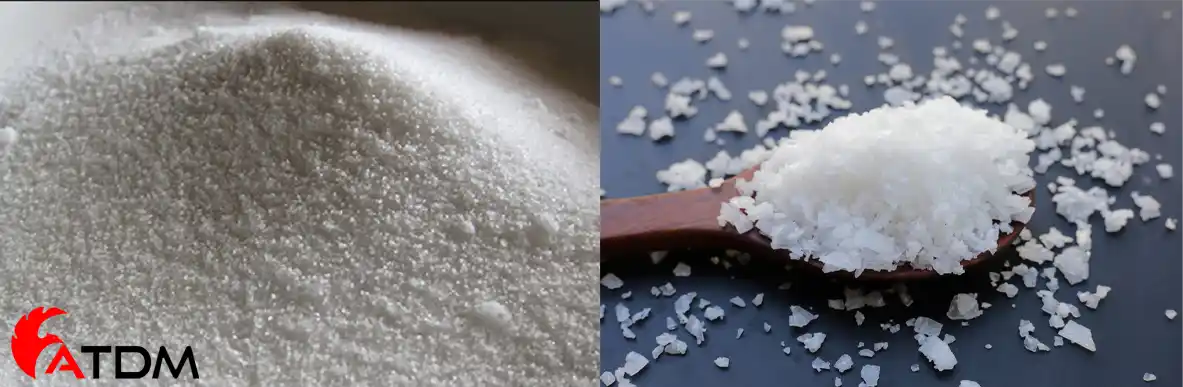
When comparing Soda Ash vs Caustic Soda, it’s essential to focus on how these two chemicals behave, perform, and deliver results across different industrial and commercial applications. While they may sometimes appear interchangeable at a glance, their differences are significant and directly impact efficiency, cost, and suitability for specific processes.
Chemical Strength and Reactivity Soda Ash vs Caustic Soda
One of the most important distinctions in the Soda Ash vs Caustic Soda comparison lies in chemical strength. Caustic soda is a much stronger alkali, making it highly reactive and capable of breaking down substances quickly and aggressively. Soda ash, on the other hand, is a weaker base, offering a more controlled and moderate reaction.
This difference makes caustic soda the preferred option in processes requiring rapid and powerful chemical reactions, while soda ash is better suited for applications where a milder, more stable interaction is needed.
Table of Contents
TogglepH Levels and Alkalinity
Another defining factor in the Soda Ash vs Caustic Soda discussion is pH level. Caustic soda has a significantly higher pH, which means it creates a much more alkaline environment. This extreme alkalinity allows it to neutralize acids quickly and efficiently.
Soda ash also increases pH, but at a slower rate and to a lower maximum level. This makes it more suitable for processes where gradual pH adjustment is necessary, reducing the risk of overcorrection or damage to sensitive materials.
Solubility and Dissolution Behavior Soda Ash vs Caustic Soda
In terms of solubility, both compounds dissolve in water, but they behave differently during the process. Caustic soda dissolves rapidly and releases a considerable amount of heat, which can require careful handling and temperature control.
Soda ash dissolves more slowly and produces less heat, making it easier and safer to manage in applications where thermal stability is important. This distinction often influences operational safety procedures and equipment requirements.
Handling and Safety Considerations
Safety is a major point of comparison in Soda Ash vs Caustic Soda. Caustic soda is highly corrosive and can cause severe burns upon contact with skin or eyes. It requires strict handling protocols, protective equipment, and specialized storage conditions.
Soda ash is less hazardous, although it still requires basic safety precautions. Its lower corrosiveness makes it easier to transport, store, and use in environments where worker safety and ease of handling are priorities.
Industrial Applications and Suitability Soda Ash vs Caustic Soda
The choice between soda ash and caustic soda often depends on the specific application. Caustic soda is commonly selected for industries that require strong chemical reactions, such as heavy-duty cleaning, chemical manufacturing, and certain refining processes.
Soda ash, in contrast, is widely used in applications where gentler alkalinity is sufficient. Its controlled behavior makes it ideal for processes that demand consistency and reduced risk of overreaction.
Businesses often evaluate Soda Ash vs Caustic Soda based on performance requirements rather than cost alone, ensuring the selected material aligns with operational goals.
Cost Efficiency and Consumption Rates
Cost considerations play a crucial role in the Soda Ash vs Caustic Soda decision. While caustic soda may deliver faster results due to its strength, it is often more expensive per unit and may require additional safety measures, increasing overall operational costs.
Soda ash is generally more cost-effective, especially for large-scale applications where high volumes are needed. Its lower reactivity can also result in more predictable consumption rates, helping companies manage budgets more effectively.
For companies sourcing these chemicals, reliable suppliers like ATDM can provide consistent quality and competitive pricing, ensuring optimal value regardless of the chosen product.
Environmental Impact
Environmental considerations are increasingly important when evaluating Soda Ash vs Caustic Soda. Caustic soda’s high reactivity and strong alkalinity can pose challenges in waste management and disposal, requiring careful treatment to prevent environmental harm.
Soda ash typically has a lower environmental impact due to its milder nature. It is easier to neutralize and manage in wastewater systems, making it a preferred choice in industries focused on sustainability and regulatory compliance.
Storage and Transportation Requirements
Storage and transportation also differ significantly in the Soda Ash vs Caustic Soda comparison. Caustic soda requires corrosion-resistant containers and strict environmental controls to prevent leaks and damage.
Soda ash is less demanding in terms of storage, as it is more stable and less corrosive. This makes logistics simpler and often more cost-efficient, particularly for companies handling large quantities over long distances.
Choosing a dependable supplier such as ATDM ensures that both products are delivered safely and meet industry standards, minimizing risks during transport and storage.
Performance in Water Treatment
Water treatment processes highlight another key difference between soda ash and caustic soda. Caustic soda is often used when rapid pH correction is needed, especially in systems requiring immediate results.
Soda ash is preferred for gradual pH adjustment, helping maintain balance without causing sudden fluctuations. This makes it particularly useful in systems where stability and precision are critical.
The choice between the two depends on whether speed or control is the primary requirement in the treatment process.
Impact on Equipment and Materials
The effect on equipment is another important factor in Soda Ash vs Caustic Soda. Caustic soda’s high corrosiveness can lead to faster wear and tear on machinery, pipelines, and storage tanks, increasing maintenance costs.
Soda ash is less aggressive, reducing the risk of damage to equipment and extending its lifespan. This makes it a practical option for operations looking to minimize long-term maintenance expenses.
Flexibility in Applications
Flexibility is a final point worth noting in the Soda Ash vs Caustic Soda comparison. Caustic soda’s strength makes it highly effective but less forgiving, as even small dosing errors can lead to significant consequences.
Soda ash offers greater flexibility due to its milder nature, allowing for easier adjustments and a wider margin of error. This can be particularly valuable in processes that require precision and adaptability.
Conclusion Soda Ash vs Caustic Soda
Understanding the differences between Soda Ash vs Caustic Soda is essential for making informed decisions in industrial and commercial applications. From chemical strength and pH levels to safety, cost, and environmental impact, each factor plays a role in determining which option is best suited for a specific need.
By carefully evaluating these differences, businesses can optimize performance, reduce risks, and achieve greater efficiency. Whether prioritizing power or control, selecting the right chemical ensures long-term success and reliability.


